Avoid your inquiry is delay response, please enter your WhatsApp/Skype along with the message, so we can contact you at the very first time.
We will reply you within 24 hours. If for urgent case, please add WhatsApp/WeChat: +86 16652801818,. Or call +86 16652801818 directly.
*We respect your confidentiality and all information are protected. We will only use your information to respond to your inquiry and will never send unsolicited emails or promotional messages.
Deadlines don’t pause for mud, ruts, or slopes. Standard forklifts bog down, burn time, and risk damage. A purpose-built rough terrain forklift restores control with traction, clearance, and stability—so your crew moves materials safely, even on uneven terrain.
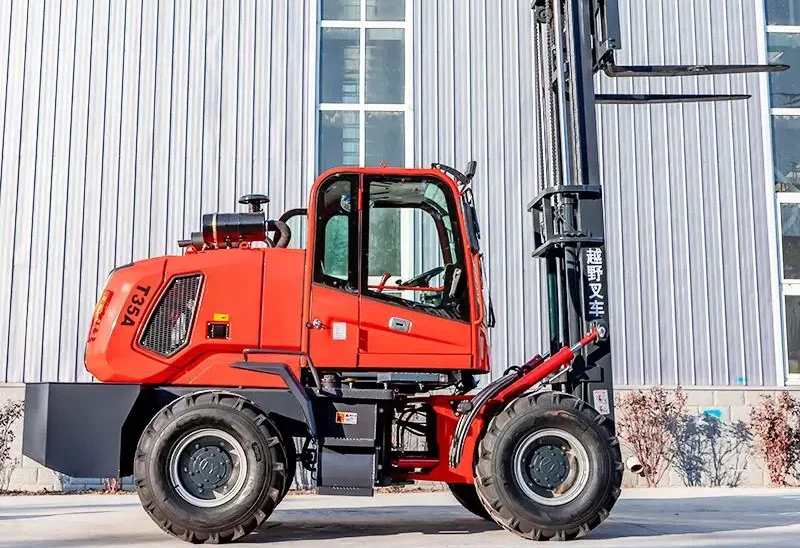
A rough terrain forklift is a heavy-duty lift truck designed to operate in challenging outdoor conditions. It uses pneumatic tires, high ground clearance, rugged drivetrains, and strong mast or telescopic boom options to handle heavy loads on disturbed or rough surfaces. Choose the type of rough terrain forklift—vertical mast or telehandlers—based on lift height, load size, and site terrain. Operators need forklift training and rough terrain forklift certification that aligns with OSHA safety rules.
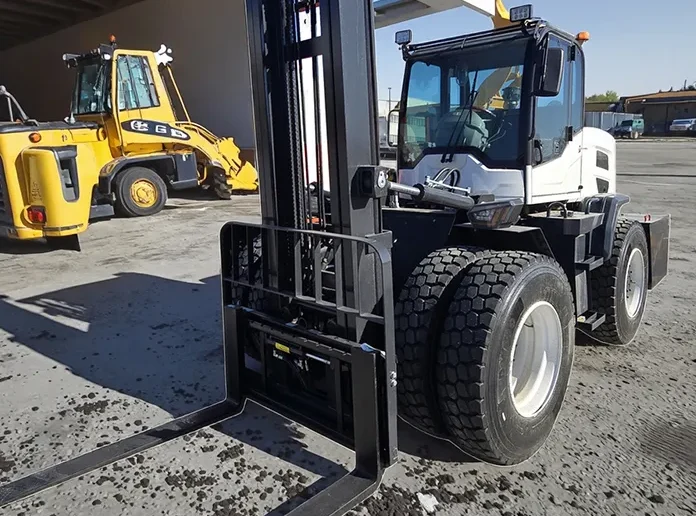
As a Construction Equipment Manufacturing plant, we build forklifts the same way we build earthmoving gear: thicker sections, sealed electrics, clean hydraulic routing, and drivetrains sized for real load cycles. This guide is written for Construction Contractors, Farmers & Agri Dealers, Landscaping & Forestry Companies, Machinery Rental Companies, and Government/Public Tenders who prioritize Durability & Reliability, Ease of Use & Features, Load Capacity, and the strength of the power system. We’ll follow the AIDA flow—Attention, Interest, Desire, Action—so you can move from research to a confident purchase.
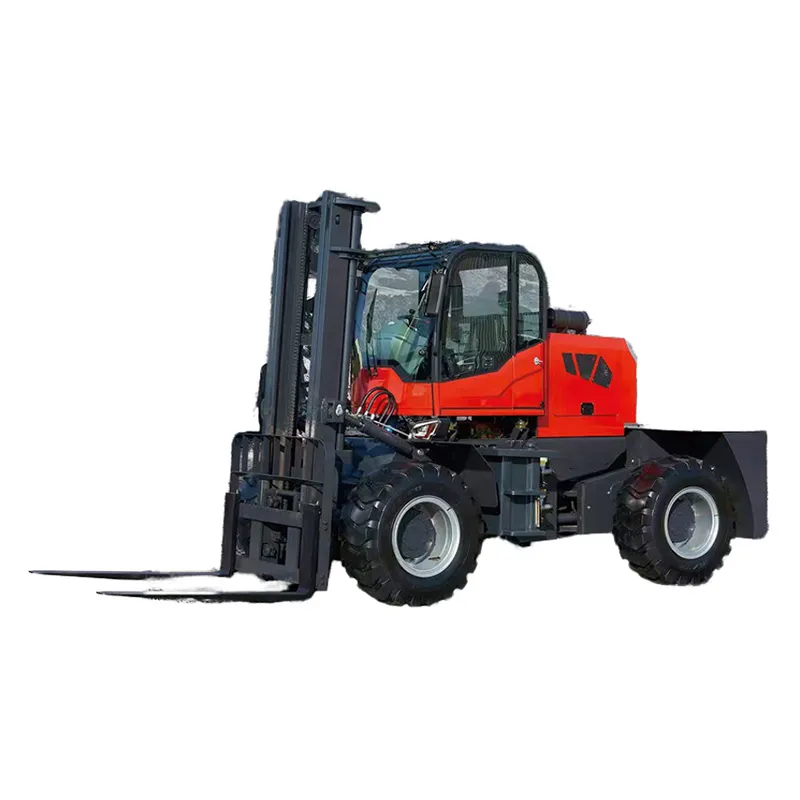
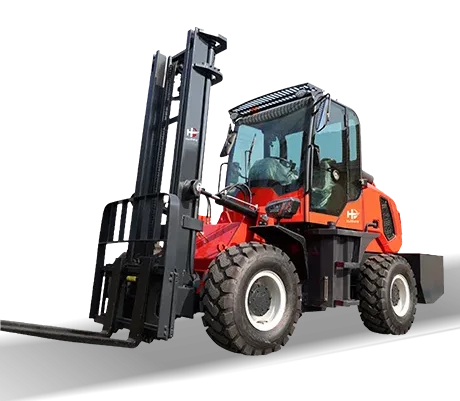
A rough terrain forklift is designed to operate in challenging outdoor environments: rutted access roads, gravel yards, soft clay, or partially graded job sites. Unlike standard forklifts built for smooth concrete in a warehouse, rough-terrain forklifts add high ground clearance, large pneumatic tires with deep tread, and reinforced frames to stay stable on uneven ground. Their forklifts are designed to maintain stability and control while carrying heavy loads across terrain where indoor trucks simply cannot.
Though rough terrain forklifts are often heavier and longer than warehouse trucks, they bring the right mix of stability and traction to keep work moving. On a construction site, at a farm lane, or at a remote dockyard, they lift, position, and load and unload materials where “smooth floor” assumptions fail.
1) Vertical mast forklifts (straight mast)
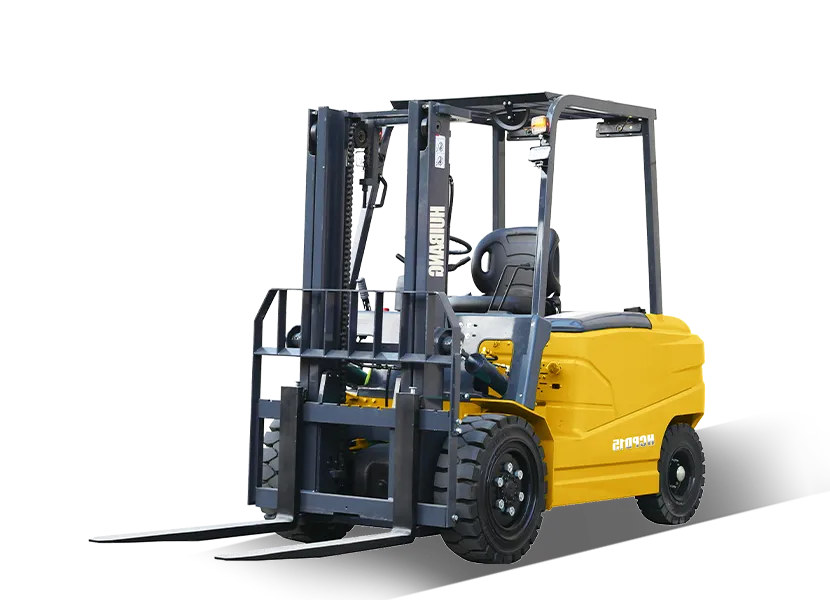
These look familiar—like enlarged warehouse trucks—but with pneumatic tires, high clearance, and a reinforced mast. Vertical mast forklifts are ideal when you constantly shuttle pallet loads from the back of a truck or trailer to staging zones over uneven surfaces. They’re compact for maneuverability between stacks and excel at repetitive loading and unloading.
2) Telehandlers (telescopic)
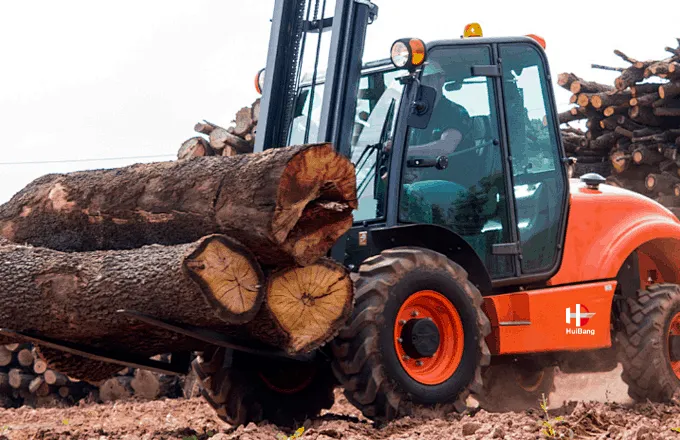
Often called telehandlers or telescopic forklifts, these combine forklift forks with a telescopic boom. They reach over trenches, fences, or walls to place bricks, trusses, or seed totes in hard-to-reach spots. If your terrain includes obstacles or elevation changes, telehandlers deliver maximum lift at distance where vertical mast machines can’t.
Proper tire choice is a core safety and performance lever. Large pneumatic tires with aggressive tread patterns spread weight and bite into loose terrain. On uneven dirt or gravel, larger front tires stabilize steering, while matched rears keep the machine tracking. Foam-filled or solid options resist punctures on nail-heavy remodels, but air-filled pneumatic tires flex better on uneven terrain and reduce bounce.
Tire size and pressure also affect drawbar pull and stopping distance. Under-inflated tires roll poorly; over-inflated tires lose footprint on rough surfaces. Correct inflation protects traction and adds comfort for the rough terrain forklift operator over long shifts.
Spec deep-dive: what parameters actually matter on terrain?
Choose conservative ratings. Forklifts typically list lift at a reference load center—don’t forget that long pallets or attachments shift the center outward and reduce capacity, especially on uneven and rough ground.
A quick, disciplined inspection keeps your forklift at optimal performance:
Remember: forklifts excel when you plan the route. A 30-second detour around a rut beats a 30-minute recovery.
Construction
Choose mast forklifts for ground-level staging and telehandlers for placing materials onto decks. Long forks with side-shift help align skids on rough surfaces without extra jockeying.
Agriculture & Forestry
All-weather terrain calls for higher ground clearance, mud-oriented tire patterns, and corrosion-resistant finishes. Spec fenders, guards, and work lights for long days and early starts.
Machinery Rental Companies
Simplicity wins. Clear decals, standard controls, and ground-level access cut training time and reduce damage. A unified parts kit (filters, pins, pads) speeds turnaround.
Government/Public Tenders
Ask for emissions packages, lighting, guards, and documentation bundles. We can prepare market-specific compliance kits to speed acceptance.

 English
  Arabic
  Turkish
  Spanish
  Portuguese
  Russian