Avoid your inquiry is delay response, please enter your WhatsApp/Skype along with the message, so we can contact you at the very first time.
We will reply you within 24 hours. If for urgent case, please add WhatsApp/WeChat: +86 16652801818,. Or call +86 16652801818 directly.
*We respect your confidentiality and all information are protected. We will only use your information to respond to your inquiry and will never send unsolicited emails or promotional messages.
Too many crews still use one machine to dig and another to load. That wastes time, fuel, and labor. A backhoe loader fixes that problem by combining both jobs in one practical machine, helping contractors and fleet buyers do more with less equipment.
A backhoe loader is a multi-purpose machine with a front loader bucket and a rear backhoe arm. It is ideal for trenching, loading, backfilling, light demolition, and general site support. The right model depends on your dig depth, lift needs, attachment options, and the type of work your crews handle most often.
A backhoe loader is one piece of construction equipment that combines a front bucket for loading and a rear digging arm for excavation. and that simple layout is exactly why the machine remains so useful. You can dig a trench, move spoil, backfill, and clean the area without bringing in separate machines.
That is the real value. This machine is not the biggest on site, but its versatility is hard to beat. On a typical job site, crews use a backhoe for utility work, loading material, small demolition, grading, and light excavation. Huibang’s HB10-20 page highlights the same logic, describing a compact machine built for trenching and handling with a balanced design and strong multi-tasking capability.
For buyers like construction contractors, farmers, landscaping companies, rental fleets, and public works teams, that flexibility matters more than hype. A machine that can switch roles quickly often beats larger equipment that only does one thing well.
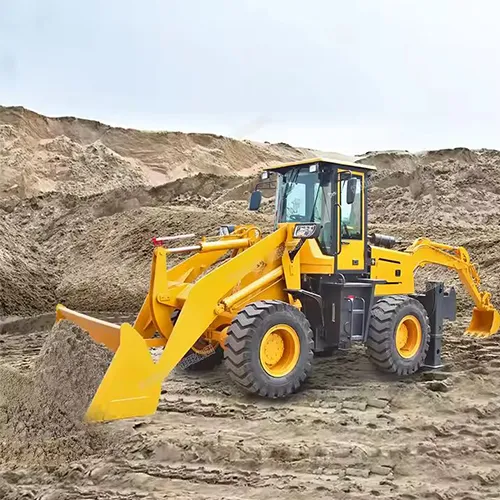
The answer is simple: they combine front loader and rear digging functions on one platform. A loader backhoe is an all-in-one solution that helps reduce machine changes and improve project momentum. That matches how many buyers think. They do not want extra trailers, extra operators, and extra idle machines when one backhoe loader can cover multiple tasks.
This is where backhoe loaders offer something special. They support digging and loading, material relocation, shallow to medium trench work, site cleanup, and even light material handling. On smaller or medium-sized sites, one machine can move from digging to bucket work in minutes. That saves setup time and helps crews maintain productivity.
I see this as one of the biggest buying reasons. A strong backhoe is not just about horsepower. It is about how much useful work it replaces in one shift.
A modern backhoe handles a wide range of tasks. Huibang’s content repeatedly frames the machine as a do-it-all solution for trenching, loading, and site preparation. The HB10-20 specifically highlights harsh environments, mining, forestry, warehouses, disaster recovery, narrow streets, and diverse work areas.
In the field, that usually means jobs like these:
This is why backhoe loaders excel in general construction and municipal support work. OSHA’s trenching and excavation resources also make clear that excavation sites are active, hazardous environments with multiple types of heavy equipment operating together, so a compact machine that reduces traffic and machine changes can be a practical advantage.
For smaller contractors and public crews, a piece of equipment that covers more than one job is often the smartest investment.
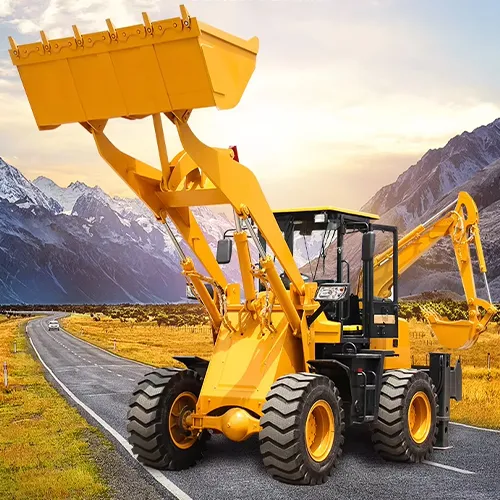
This is one of the most important buying questions. A backhoe loader sits between an excavator, a wheel loader, and skid steer loaders in terms of role. If you only need deep digging, a dedicated excavator may be stronger. If you only need fast loading, a loader may win. But if you need both, a backhoe is often the better choice.If you dig trenches daily and also need loading, a backhoe loader is an excellent one-machine solution.
A skid steer is agile, but it does not replace a true rear digger. A compact tractor can help with lighter farm work, but it usually cannot match the digging geometry and breakout strength of a proper backhoe. A loader-style machine moves material fast, but it will not replace a rear boom and excavator bucket for trenching. That is why many buyers compare these machines, then come back to the same conclusion: a loader backhoe does more than either one alone.
Because the work happens at the bucket. Buyers often focus on engine size first, but the more useful question is how the machine actually digs. Huibang’s HB10-20 is positioned around a maximum digging force of 36 kN, and that directly shapes how the machine handles compacted soil, shallow trench work, and repeated digging cycles.
The best way to think about this is simple. Dig depth tells you how deep the rear backhoe can reach. Breakout force and bucket force tell you how confidently it can cut, pry, and lift material. If your work includes clay, rocky fill, old roadbase, or breaking asphalt, these numbers matter more than sales language. Huibang’s product also stresses smooth hydraulic control, strong traction, and balanced weight distribution, all of which support safer digging performance.
For crews doing drainage, municipal repair, or pave prep, a backhoe that digs cleanly and predictably saves time every day.
On real jobs, the most useful backhoe attachments often include:
Huibang also emphasizes multi-function design and adaptability in its loader family, which fits the same idea: one machine becomes more valuable when it can take on a range of attachments and cover a variety of tasks.
A machine with the right tools does more than dig. It supports loading and material handling, cleanup, and small specialty tasks without adding another machine to the fleet.
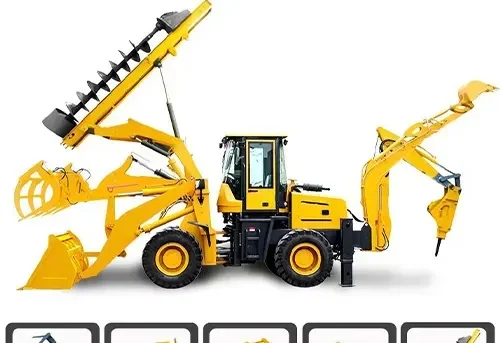
Before any equipment purchase, ask practical questions. A good dealership or direct manufacturer should be able to explain the machine clearly, not just send a spec sheet. You want to know how it performs, how it is serviced, and what jobs it really fits. Huibang’s site positions the machine for harsh environments, warehouses, mining, disaster recovery, and narrow streets, so application fit should be a core part of the discussion.
Here are the questions I would ask every time:
Those questions matter because a backhoe loader is a working asset, not just a catalog item. The right answer should make the machine easier to own, easier to train on, and easier to keep productive.
Huibang’s HB10-20 page specifically calls out rough terrain adaptability, reinforced frame design, smooth hydraulics, adaptive cooling, weather-resistant components, tight turning capability, and fail-safe hydraulic braking. That list matters because many buyers work in difficult conditions, not on perfect surfaces.
This is where backhoe loaders deliver real value. They work in narrow streets, mixed farm yards, disaster response zones, forestry support work, and public repair jobs where one machine must do many things. The machine is compact enough for tighter access yet capable enough for daily trenching, loading, and cleanup. That combination of power and versatility is why the loader backhoe remains relevant even in a market full of specialized machines.
In plain language, it earns its place because it helps crews finish more work with fewer machine changes.
A backhoe loader is a multi-purpose machine with a front loader bucket and a rear digging arm. It is used for trenching, loading, backfilling, excavation, and site support.
Not always. An excavator is usually better for dedicated deep digging, while a backhoe is better when you need both digging and loading on one platform. The best choice depends on the work.
Common uses include trenching, site cleanup, material loading, utility work, light demolition, grading, and landscape support. Huibang also positions its HB10-20 for harsh environments, warehouses, forestry, and narrow streets.
Focus on dig depth, bucket size, turning radius, power, hydraulic system, attachments, and after-sales support. Those factors matter more than brand name alone.
A center-pivot backhoe is a common general-purpose design. A side-shift version is better for tight spaces and work near structures because the rear boom can move laterally for more precise trenching.

 English
  Arabic
  Turkish
  Spanish
  Portuguese
  Russian